Thursday, 15 August 2013

Chobham Common - 8 August 2013

A visit was confined to checking the hill/mound area on the SE corner of the north side for Grayling, rather than doing a tour around the area for birds, though one or two other potential ringing areas for Nightjar were identified for next season.  A few Grayling were found in the expected area and only gave their customary wings up photographic views. One day there might just be an open winged opportunity. A very tatty worn Silver-studded Blue was seen, along with a 2nd generation Holly Blue. A few Small Heaths were still present along with Small Skippers.

Grayling


Silver-studded Blue

Holly Blue

Gatekeeper


Stanwell Moor - 7 August 2013

Due to other commitments it's been three weeks since our last visit so we headed to the site, with shears just in case, to do an evening session. We knew from the recent  result at nearby Wraysbury gravel pits that birds should be around so we went to find out how much the level of the lake had dropped, how the vegetation had developed over the last few weeks and to see if we might catch a few birds.

The shears were definitely needed as the reeds had grown to the point where they had toppled into the ride, essentially blocking a section some fifteen long. Then there were, of course, the usual up shoots along the ride floor but these were only a foot or so high and not a problem. The lake had receeded further and it was now possible to reach the furthest nest post side without the use of waders! We didn't venture around to the other spit  - but needless to say there will be much bramble to remove before we can site a net there.

We tidied a little then put up three nets in the reed bed and into the lake with an additional net placed in the old filter bed ride. We began catching straight away. The Reed Warblers were mainly youngsters. We also attracted some juvenile Chiff-chaffs with a single Sedge Warbler and our first Cetti's Warbler of the year. We do not think the Cetti's bred near the ringing ride but a male was consistently heard from some 200m away in vegetation bordering the Colne that runs along the closest boundary line.

There were few hirundines above when we arrived but some small groups dropped in to take advantage of the many mosquitoes swarming above the reeds and some of them also found the net.

 3J Cetti's Warbler Y979840

Juvenile Sand Martin

Totals -17 (1)

Sand Martin - 2
Swallow - 4
Cetti's Warbler - 1
Sedge Warbler - 1
Reed Warbler - 5 (1)
Great Tit - 1
Chiff-chaff  - 3

Aston Rowant - 6 August 2013


A visit was made to the north side was with the intention of photographing Chalkhill Blue and Silver-spotted Skipper. The visit was fairly productive with good numbers of both species being on the wing, together with some fresh Common Blues, an odd few Brown Argus, and a number of both Large and Small Whites.

Chalkhill Blue


Silver-spotted Skipper


Meadow Brown


 Large White

California - species list (part 7)

Below is a list of the 196 bird and the various mammal species seen, with dates and locations given, and with the 93 new birds for us in bold. I am still working on the butterfly photographs to confirm the ID of those not published within the blog.


21/7/2013

Sausalito
1.   Starling
2.   Western Gull (1)
3.   Brewers Blackbird
4.   American crow
5.   Black-crowned Night Heron
6.   Mallard
7.   Canada Goose
8.   Double-crested Cormorant
9.   Elegant Tern (2)
10. Caspian Tern

Farallon Islands boat
11. Heermann's Gull (3)
12. Western Grebe (4)
13. Brown Pelican
14. Pigeon Guillemot (5)
15. Guillemot (Common Murre)
16. Snowy Egret
17. Sooty Shearwater
18. Red-necked Phalarope
19. Rhinocerous Auklet (6)
20. Marbled Murrelet (7)
21. Brandt's Cormorant (8)
22. Palegic Cormorant (9)
23. Horned Puffin (10)
24. Cassin's Auklet (11)
25. Black-footed Albatross (12)
26. Pink-footed Shearwater (13)
27. Northern Gannet

plus
Californian Sealion
Northern Fur Seal
Pacific Harbour Seal
Harbour Porpoise
Hump-backed Whale

22/7/2013

Presidio
28. Black Phoebe (14)
29. Dark-eyed (Oregon) Junco
30. Anna's Hummingbird (15)
31. Chestnut-backed Chickadee (16)
32. Red-masked Parakeet (17)
33. American Robin
34. House Finch
35. House Sparrow
36. Bushtit (18)
37. Hooded Oriole (19)
38. Pygmy Nuthatch (20)
39. White-crowned Sparrow
40. Song Sparrow
41. Mourning Dove
42. American Goldfinch
43. Red-tailed Hawk
44. Lesser Goldfinch (21)
45. Raven
46. Hutton's Vireo (22)
47. Allen's Hummingbird (23)
48. Violet-green Swallow (24)
49. Cooper's Hawk
50. Black-chinned Hummingbird (25)

Crissy Marsh
51. Long-billed Curlew (26)
52. Willet
53. American Herring Gull
54. Barn Swallow

Alcatraz Island
55. Wandering Tattler (27)

23/7/2013

Pillar Point Harbour
55. Great Blue Heron
56. Short-billed Dowitcher
57. Western sandpiper

Pescadero Marsh
58. Sanderling
59. Black Oystercatcher (28)
60. Wrentit (29)
61. Harlequin Duck
62. Black Turnstone (30)
63. California Gull (31)
64. Rock Sandpiper (32)
65. Belted Kingfisher
66. Great Egret
67. Pied-billed Grebe
68. White-tailed Kite (33)
69. Brown Cowbird
70. Goosander
71. Common Yellow-throat
72. Wilson's warbler
73. Hairy Woodpecker
74. Pacific-slopped Flycatcher (34)
75. Northern Flicker
76. Ruddy Duck
77. Gadwall
78. Hudsonian Whimbrel
79. Turkey Vulture
80. Western Scrub-Jay (35)

plus
Black-tailed Deer


San Gregorio State Beach
81. Least Sandpiper
82. Cliff swallow
83. Northern Rough-winged Swallow

Gazos Creek
84. Olive-sided Flycatcher (36)
85. Orange Crowned Warbler
86. Purple Finch
87. Stellers Jay (37)
88. Band-tailed Pigeon (38)
89. Black-headed Grosbeak (39)
90. Townsend Warbler (40 - seen by D only, alas)

Monterey
91. Great Horned Owl

24/7/2013

Point Lobos
92. Bewick's Wren (41)
93. Spotted Sandpiper
94. Brown Creeper

plus
Sea Otter

Carmel State Beach
95. Surf Scoter
96. Killdeer

25/7/2013

Monterey Harbour
92. Tree Swallow
97. Black-necked (Horned) Grebe

Monterey Whale watch boat

Blue Whale
Risso Dolphin

Los Padres Dam
98. Oak Titmouse (42)
99. Acorn Woodpecker (43)
100. Nuttall's Woodpecker (44)

plus
Western Grey Squirrel
Fox Squirrel

Racoon

26/7/2013

Andrew Molera State Park
101. Swainson's Thrush
102. Brent Goose
103. Whitefronted Goose
104. Bufflehead
105. Lazuli Bunting (45)
106. Spotted Towhee (46)
107. California Quail (47)
108. American Kestrel

plus
California Ground Squirrel

27/7/2013

Access road to Pinnacles National Monument
109. Northern Mockingbird
110. Greater Raodrunner (48)
102. Lark Sparrow
103. Yellow-breasted Chat (49)
104. Western Bluebird (50)
105. Lawrence's Finch (51)

plus
Black-tailed Jack-rabbit

Pinnacles National Monument
106. Canyon Wren (52)
107. White-breasted Nutchtach
108. Golden Eagle
109. Californian Condor (53)
110. Phainopepla (54)
111. White-throated Swift (55)

plus
Meriam's Chipmunk

Upper Carmel Valley
112. Yellow-billed Magpie (56)

plus
Desert Cottontail
28/7/2013

Julia Pfeiffer Burns State Park
113. Cassin's Vireo (57)

plus
Brush Rabbit

Pfeiffer Big Sur State Park
114. Downy Woodpecker
115. Wild Turkey
116. Pacific Wren (58)
117. American Dipper (59)

plus
Bobcat

Carmel State Beach
118. Greater Yellowlegs
119. Solitary Sandpiper
120. Snow Goose

29/7/2013

Los Barios Wildlife Area
121. American White Pelican
122. Dunlin
123. Ashy-throated Flycatcher (60)
124. Western Kingbird
125. Pintail
126. Ring-necked Duck
127. Long-billed Dowitcher
128. American Avocet
129. White-faced Ibis
130. Black-necked Stilt
131. Wilson's Phalarope
132. Semi-palmated Plover
133. Hen (Northern) Harrier
134. Loggerhead Shrike
135. Boat-tailed Grackle

plus
Coyote

St Luis National Wildlife Reserve
136. Western Meadowlark
137. Tricoloured Blackbird (61)
138. Blue Grosbeak (62)
139. Wood Duck
140. Red-winged Blackbird
141. Purple Martin
142. Yellow-headed Blackbird

30/7/2013

Yosemite National Park
143. Calloipe Hummingbird (63)
144. Pine Siskin (64)
145. Cassin's Finch (65)
146. Red-breasted Nuthatch
147. Yellow-rumped Warbler
148. Western Tanager (66)
149. McGillvray's Warbler (67)
150. Fox Sparrow (68)
151. Lincoln Sparrow
152. Mountain Chickadee (69)
153. Nashville Warbler
154. Black-throated Grey Warbler (70)
155. Hermit Warbler (71)
156. Chipping Sparrow
157. Red-napped Sapsucker (72)
158. Mountain Bluebird (73)
159. Pine Grosbeak (74)
160. Hammond's Flycatcher (75)
161. Townsend's Solitaire (76)

El Portal
162. Osprey

31/7/2013

Yosemite National Park
163. Black Swift (77)
164. Western Wood-pewee (78)
165. House Wren
166. Black-throated Blue Warbler

plus
Lodgepole Chipmunk
Golden-mantled Ground Squirrel

1/8/2013

Road to Bodie Historic State Park
167. Pinyon Jay (79)
168. Mountian Quail (80)

Bodie Historic State Park
169. Greater Sage Grouse (81)
170. Praire Falcon (82)
171. Swainson's Hawk
172. Sage Sparrow (83)
173. Sage Thrasher
174. Brewer's Sparrow (84)
175. Green-tailed Towhee (85)
176. Vesper Sparrow

plus
Belding's Ground Squirrel
Yellow-pine Chipmunk

Bridgeport
177. American Magpie (86)

Lee Vining
178. Rufous Hummingbird (87)

Mono Lake Tufa State Park
179. Knot
180. Grey Flycatcher (88)
181. Bullock's Oriole (89)
182. Savannah Sparrow
183. Say's Phoebe

Mono Lake County Park
184. Common Poorwill (90)

2/8/2013

June Lake
185. Red-breasted Woodpecker (91)
186. Warbling Vireo

Lee Vining
187. Dusky Flycatcher (92)

Yosemite National Park
188. Clarke's Nutcracker (93)

3/8/2013

Baylands Nature Preserve
189. Lesser Scaup
190. Marbled Godwit
191. Foster's Tern
192. Moorhen
193. Ring-billed Gull
194. Cinnamon Teal
195. Bonaparte's Gull
196. Grey Plover

California - Reprise (Yosemite to San Francisco Bay) 2 to 3 August 2013 (part 6)

Day Thirteen

Our holiday was nearing its end so it was time to head west back towards the airport. We spent the first half of the day travelling through Yosemite.

 
Alpine meadows at one of the eastern entrances to the park

Edith's Copper

Ruddy Copper

We stopped just yards from the enterance and very soon got fantastic views of Clarke's Nutcracker.
We resumed our travels with fading hopes of seeing bear on our visit, even 'though all the indications were that bears were at large and living among the visitors. 

 Bearproof food containers are provided at every camp site.

Each year an average of 10 bears are killed or injured on the park roads.


Bear damage at White Wolf 

Tree lined road

We scoured the road sides checking every likely bear shape, but all turned out to be blackened tree stumps, eratics or shadows. Not one turned out to be a bear behind ( or butt as the locals would say.)

We drove out of the park and on through some different countryside until we joined the 101 back to San Francisco over the San Mateo Bridge.


Day Fourteen

Our time with James in California had come to an end and he was dropped off at the airport for a 10.40am flight. We still had time to fill until our 7.45pm flight so headed to Palo Alto wetlands to spend some time looking for Clapper Rails.

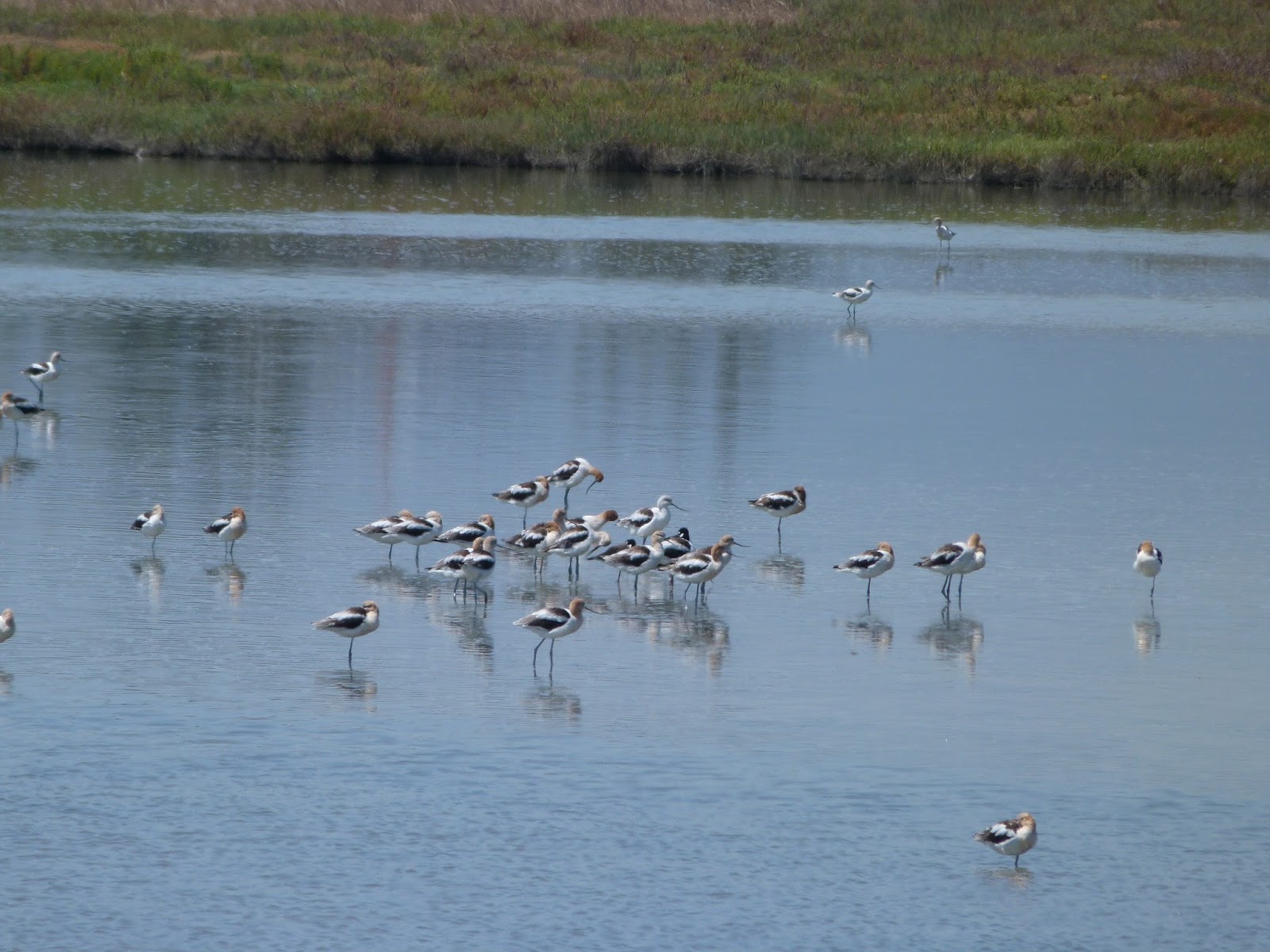
On arriving, we discovered the tide on the rise and too high to allow a realistic chance of seeing rails. But, at least we enjoyed views of nesting Cliff Swallows at the visitor centre. We walked some of the short trails finding American Avocets and Stilts really close to the path.

Juvenile Cliff Swallow

 Snowy Egret

Black-necked Stilt
 
American Avocets
 
Great White Egret

 Greater Yellowlegs

We continued working our way around the wetlands and got a few more species on the trip list. There were good numbers of Marbled and Hudsonian Godwit, Western Sandpiper, Willet and Dowitchers. Foster's Tern, Ring-billed Gull, Bonaparte'sGull, Cinnamon Teal and Common Moorhen were also present.

Least Sandpiper

American Avocet


American White Pelicans and Short-billed Dowitchers

  Willet

 American White Pelican

Barn Swallow youngsters awaiting food bearing adults 
(and looking a little down in the mouth).

We also managed to photograph a Swallowtail butterfly.

Pale Swallowtail

After a fortnight in California it was now time for us to take to the air and fly back to the UK. We never did see Clapper Rail and missed California Thrasher, a few Woodpecks and all the Kinglets but we also got a few things that were not expected (see part 7 for species list). It's an awkward time of year with a lot of youngsters about and the added problems of high temperatures sending birds into cover and ultra bright light at localities away from the coastal murk, though often when mixed flocks were found they contained all the birds you might expect to find scattered around in the breeding season, altogether. We all had a great time and would definitely recommend a trip to California for birding.


California - Sierra Nevada (Bodie and Mono Lake) 1 August 2013 (part 5)

Day Twelve
Bodie State Historic Park & Mono Lake

The plan was to visit historical Bodie then go to see the tuftas at Mono Lake. The focus was to switch from birds and do a little more of the general tourist attractions.

We arrived at the turn off to Bodie at about 8.30am and saw that visitors may not enter before 9am, but it seemed to be a distance along the road so we set off anyway. The road took us through a steep sided valley and as we drove through a flock of Pinyon Jay were spotted making their way from shrub to shrub. The landscape began to change gradually to Sage brush and our road, passing into the jurisdiction of a different department, became a dirt track for some time before another change of maintainer switched the surface to gravel. We approached Bodie and saw the remains of the once bustling gold mining town. The wealth and inhabitants may have gone now but they left behind a colourful history ( like the story of its founder Waterman S. Bodey who discovered gold in 1859but froze to death while bringing in winter supplies in the early days and the numerous 'bad men' and killings for which Bodie became known). The town was finally abandoned in the early 1930s after the gold ran out and a couple of substantial fires.

The red barn

 The view down Green Street

  Furniture has been left in most of the houses and businesses

The area turned out to be excellent for Sage brush species. We got a lot of what might be hoped for but Prarie Falcon, Sage Thrashr, Brewer's Sparrows and Sage Grouse gave really good views.

Sage Sparrow

 
Greater Sage Grouse

Bealdings Ground Squirrel

It's amazing to think that all the major cities of the US had their origins in wooden dwellings such as these, but some, like Bodie just didn't make it.

We stopped at Lee Vining (named for the founder Leroy Vining (who accidently shot himself at Aurora) and previously named Poverty Flats for the infertile soil) for coffee at 'Latte Da' and viewed Anna's and Rufous Hummingbird in the garden. One tenacious little individual defended a feeder all to itself and gave stunning flight and perched views.

Rufous Hummingbird

In the afternoon we went down to Mono lake south Tuffs, mineral formations left by under water hot springs. The lake is now reducing so most of the formations are out of the water. Mono Lake is also the primary nesting site for California Gulls.

Mono Lake and Tuffs

Mono craters

We got great views of Loggerhead Shrike, Bulwark's Oriole, Grey Flycatcher, Say's Phoebe and Wilson's Phalaropes. The main attraction for the birds were the millions of flies swarming along the lake shore.

Californian Gull

Green-tailed Towhee

Least Sandpiper

Sage Thrasher

Grey Flycatcher

Say's Phoebe 

 
Bullock's Oriole

Wilson's Phalarope

After dinner we tried for Common Poorwills on the lake road, but got poor views -just one caught on the road and another passing some 5ft off the ground in our headlamps.