Showing posts with label Water Pipit. Show all posts

Saturday, 16 November 2024

UK Water Pipit project, a new longevity record - 15th November 2024

Reports this afternoon of a Water Pipit marked on 26/11/2020 being observed at Strumpshaw Fen. The bird was ringed at Cantley beet factory, Norfolk by Stephen Vickers of UEA RG and the observation is a new longevity record, in the UK, for this species. Two other birds have exceeded the current record published up to 2023 as shown below from the British Trust for Ornithology website. However, the sight records of birds at Lytchett Bay, Dorset and Lakenheath, Suffolk from the start of 2024 have been superseded by 1N at Strumpshaw.

Water Pipit  Anthus spinoletta    3 years 1 month 25 days
 
H607471First-year 07-11-1993 Rye Meads: c. 51°46'N 0°0'E (Hertfordshire)
Caught by ringer 01-01-1997 Rye Meads: c. 51°46'N 0°0'E (Hertfordshire)   0km   3y 1m 25d

Image courtesy of S. Vickers 

Monday, 25 July 2022

Picos De Europa, Spain - searching for Water Pipits, July 2022

The UK Water Pipit project is usually active between October when the birds first arrive in the UK, and April when they return to their high altitude breeding grounds and of the 50 or so individuals marked since 2018, there have been no confirmed reports away from the wintering grounds.

In the third week of July, Chris and I have been visiting the Picos de Europa, Spain for spectacular scenery, butterflies and birds. This is also a potential summering ground for our UK wintering Water Pipits. The Picos de Europa is a mountain range extending only 20km long, covering 646 square kilometres and forming part of the more extensive Cantabrian mountains in the north of Spain. The usual daytime temperatures here hover around the 21 degrees Celsius mark, however on only one of the seven days did the temperature fall below 25 degrees and it exceeded 35 degrees on two days. The grassland and mountain flowers were certainly showing the effects of the unusually high temperatures, due to the heatwave that was also affecting the UK at the time. Yet another example of changing conditions due to global warming.

The few records of birds seen in the Picos seem to be in April, possibly before the actual breeding grounds are reached. This paper from 2010 suggests that snow cover is usual for 6 to 7 months of the year at the breeding altitudes and one has to wonder whether this is still the case in 2022 with warmer temperatures decreasing the time when snow is present.

  https://www.researchgate.net/publication/281668007_The_snow_in_the_Picos_de_Europa_Geomorphological_and_environmental_implications 

 Even without snow in July, much of the area is inaccessible, so 'Where to look for Water Pipits?' was the question.

We decided to try a couple of places that mirror our old and current winter ringing sites, Staines Moor, Surrey and Wind Ken Hill, Norfolk with features as follows: cattle and/or horses present, grassland of varying lengths and water flowing through soft mud, forming pools. Additionally, the site should be above the treeline.

http://datazone.birdlife.org/userfiles/file/Species/erlob/summarypdfs/22718571_anthus_spinoletta.pdf 

The literature states that breeding may be between 615-3200 metres altitude, most commonly from 1400 - 2500 metres. Most water flows into rocky stream and river beds and with high temperatures the few, damp marshy areas were drying up but despite the challenges, we did manage to find Water Pipits at two sites.

Water Pipit, Puerto de San Glorio 23/07/2022

The first site was at the Picos heights, accessible by cable car from Fuente De. The line covers a 753m vertical drop from the second cable car station at a height of 1850m (6070ft), with the tallest mountain, Torre de Cerrado, reaching 2650m. The birds were in a broad, marshy depression close to the path away from the upper station, so at an altitude of approximately1870m. They were not close enough to photograph and soon departed as more and more tourists arrived.

First Water Pipit feeding area below Torre de Cerrado, 20/07/2022

Here Water Pipits share the habitat with Egyptian Vultures (above), 
Alpine Choughs, Black Redstarts and Alpine Accentors.

Alpine Chough

Black Redstart carrying food

A rather precocious Alpine Accentor juvenile.

Access to this site required either a 4 to 5 hour walk to climb 700m, or nerves of steel
 for the 5 minute trip each way.


The second site was on the mountain pass road of the Puerto de San Glorio, that rises to an elevation of 1609m. Here water arrives via a pipe and flows into a cattle trough, frequently spilling over to leave the surrounding grass verdant and the soil permanently wet. Here we watched a few birds, mixed with Meadow Pipit, feeding for a while. There were, of course, none of our darvics! Most were first year birds with just one adult in badly worn plumage. 

There has been a colour ringing effort to study the Water Pipits of the Picos and, like our project, the aim there is to learn more about the seasonal movements of that individual population in addition to the breeding habits. Only by developing a better understanding of birds and their life habits can we hope to conserve and protect birds in our changing environment. 

Picos Water Pipit scheme details can be found here https://cr-birding.org/node/961


More Griffon Vultures were seen above the second Water Pipit site.

One solution to the question of discovering exactly where our Water Pipits go to breed is the use of geolocators, but we would need to guarantee re-traps of birds carrying the devices. We could consider funding a few geo-locators, but to get the data, it would be reliant on re-capturing the birds. The other option would be using Modus trackers, but there are no receivers at present near any of the potential breeding areas. 
 

Thursday, 16 December 2021

Wild Ken Hill Fresh Marsh - 16th December 2021

 As soon as the opportunity arose (a forecast for sufficiently low wind) and we were back at Ken Hill trying to mark more birds for the Water Pipit project. The site was considerably wetter than last time, but we were still able to find two suitable areas for combinations of two panel nets. We only caught one bird but it was the target species, bringing the total number of marked birds here to three.


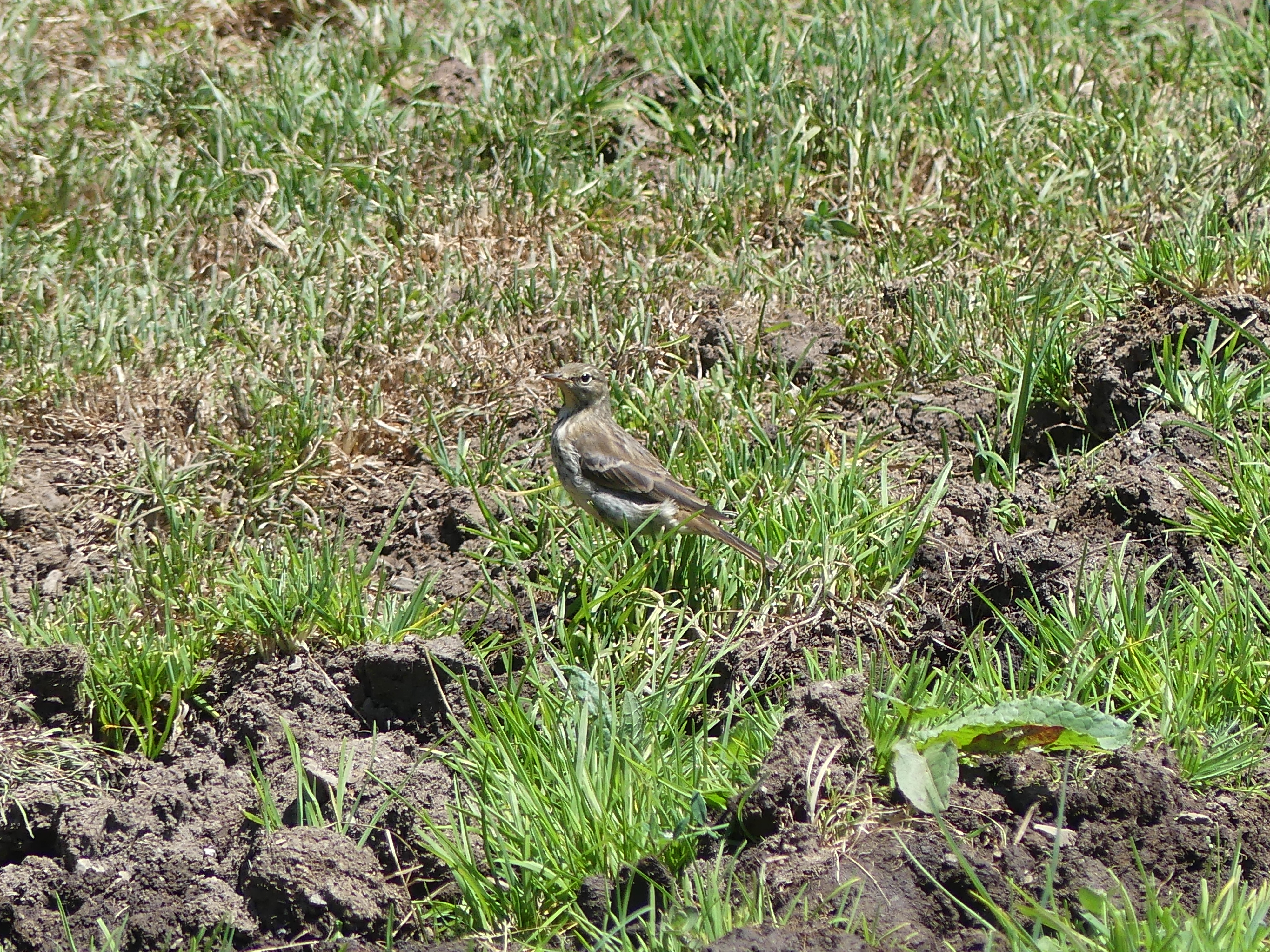
Adult Water Pipit

We were on site to meet LP shortly after 7am. There are some distinct benefits to getting out on the fresh marsh early on a winter's morning.

Pink-footed Geese leaving their roost

Misty morning on the marsh

There were at least up to nine Water Pipits present, with regular pass overs by a pair of Marsh Harriers, which at one stage did some displaying to each other, couple of Ravens over croaking and a day time flying Barn Owl.

Total: 1

Water Pipit - 1

Wednesday, 24 November 2021

Wild Ken Hill Fresh Marsh - 24th November 2021

 Having had news of 3 Water Pipits on the fresh marsh, Chris and I decided to give it a go in advance of the cold and windy weather due to affect us by the weekend. This was a first attempt at this location and there were cows still there grazing so we were very happy when they decided to move out of the area where we wanted to set nets, knowing how curious cows can be. Along with a combination of three double panels, we also put a double full height net between a ditch and small reedbed with a single, close to our base where a ditch passes under the track. 

It turned out to be a small but rather varied catch. Two Water Pipits trapped and colour marked from 6 present, was more than we could have hoped for. Added to that , there was also a Kestrel from the two panel net, a Cetti's Warbler from the single, a hand captured Mute Swan (also colour ringed) and a solitary Lesser Redpoll.

Water Pipit adult

Juvenile Water Pipit

Adult Kestrel female


Total: 10

Mute Swan - 1 
Kestrel - 1
Water Pipit - 2
Wren - 2
Robin - 1
Cetti's Warbler - 1
Blue Tit - 1
Lesser Redpoll - 1

Thursday, 4 March 2021

Staines Moor - 3rd March 2021

Our first outing of the year here with a forecast of beautifully low wind. We know not to expect too much from this high effort, low yield site. We have to carry all equipment on to the moor and after flooding it is often very difficult going under foot. For all this effort there is little to disguise or shelter nets and catching is not easy.

On arrival today we could see that the Stonechats had moved off. There were however a few Meadow Pipits and at least 6 Water Pipits. We were using three panel nets and put up two doubles and a single. Chris went off to check for swans and I gave it 20 minutes then walked the site in the hope of flushing a pipit into a net. This is necessary as the birds are clearly aware of the nets and rarely fly into them without help. I was pleased to flush a bird into one of the doubles, surprised that it stayed there until I could get there to extract it and doubly surprised to see that it was a Water Pipit.


The swans were nowhere to be seen.

A couple of Meadow Pipits provided an added bonus as the morning progressed although a flock of some 30 Pied Wagtails deftly evaded the nets. The addition of the Wagtails foraging around the flash seemed to affect the usually extremely cautious behaviour of two of the pipits and although the chasing birds both hit the single, only one was caught and another Water Pipit was marked under the scheme.


Total: 4

Meadow Pipit - 2
Water Pipit - 2

Friday, 12 January 2018

Stanwell Moor GP - 11th & 12th January 2018

Over the past couple of years there has been a Barn Owl seen over Stanwell Moor and we had arranged for PW, not only a well respected 'owl man' but also an old friend of Chris' from his DEFRA days, to bring and site a couple of boxes for us. Chris and I arrived earlier and we worked a few nets. Then they went off to put up the boxes while I took down and packed away.

Inspite of all  the trees lining the south field, it was difficult to find a suitable tree and only one box could be put up. We may put the second up close to the Colne where a telegraph pole has stood unused for a number of years. One good thing was that PW was impressed by all the evidence of field voles in the water meadow, so different to the farmland where he usually works.

Totals: 14 (8)

Dunnock - 3 (2)
Chiffchaff - 2
Goldcrest - 0 (3)
Long-tailed Tit - 8 (1)
Great Tit - 1 (2)

After noticing a good number of Water Pipits on the wet meadows we returned the following day to see if there would be a better chance of catching there rather than on Staines Moor where we've tried on four separate ocassions, this winter, with no positive result.

We set a double, two panel, of 12m nets, a double 18m configuration and a 3 panel, 12m. There was also a single net at the end of the track to the south fields.

It was a very slow start with no birds in the first couple of hours, then we found several Reed Buntings along the Colne as we walked back from the Staines Moor end of the fied. There were also a couple of Stonechats and a Dartford Warbler moving through the weedy vegetation around the pool. At first we thought we had caught one of the Stanechats, but it was actually a Dunnock. A short time later we got another Dunnock in the track net.

There were a total of nine Water Pipits and the birds moved together as a loose flock, apparently very net aware. It began to rain lightly at around mid-day and while Chris went to see what was on the lake, I went to take the track net down, seeing a ringed Chiffchaff go into the net as I walked along the path. This bird turned out to be JDR838, a control.

Chris went to check the nets around the pool prior to processing the Chiffchaff and returned, finally, with one of the Water Pipit. This bird was also colour ringed as part of the project that we began in 2017, after catching two birds in 2016, although none were captured in the following year.

Finally we are able to fit our first colour ring on a Water Pipit.

Water Pipit age 5

The Water Pipits remained in the area but no more could be captured.

Controlled Chiffchaff JDR838 aged 4

Total: 4

Water Pipit - 1
Dunnock - 2
Chiffchaff - 0 (1 control)

Wednesday, 30 November 2016

Stanwell Moor GP & Staines Moor - 29th November 2016

Stanwell Moor

By far the coldest day yet, this winter, with a very light wind and a heavy frost that lingered all morning. We set five nets, three in the reed-bed and another two across the track from the stream. There didn't seem to be much about and catching progressed slowly. In just over three hours we captured 10 new and 6 retrapped birds.

We caught four Chiffchaffs, all with fat scores of zero, a Cetti's Warbler along with a few Wrens and Long-tailed Tits, and three Robins which were all local re-traps.

 Chiffchaff

 Robin, age 3

Cetti's Warbler, age 3

Total: 10 (6)

Wren - 2 (1)
Dunnock - 0 (1)
Robin - 0 (3)
Cetti's Warbler - 1
Chiffchaff - 4
Long-tailed Tit - 3 (1)


Staines Moor
This is a wintering site for Water Pipit, a species that visits the UK in relatively low numbers each winter. The annual number ringed in this country is usually low, 10 in 2015, 12 in 2014, 1 in 2013, 9 in 2012. One of these was a bird ringed in our adjacent site, Stanwell Moor, in November 2012 with another in November 2010. We managed to get permission to target Water Pipits over on Staines Moor and thought that a colour ringing project would be worthwhile, if catching was possible. This is a very open site with a lot of dog walkers, often with dogs running off the lead.

Today, at midday, we arranged to meet the Countryside and Commons officer responsible for the area for an initial try at capturing Water Pipits. We put up two, two panel 12m nets alongside the river, tried audio-lures (appropriate licence endorsements held) and waited. There were a few birds around, although more Wagtails than Pipits and we had no captures for quite a while. The first bird was flushed into the net by a birder walking by the river's edge.

 Water Pipit, 2513265, age 3


Water Pipit 2513266, age 3

As the temperature began to drop we also caught a second bird. Both were fitted with metal rings - and the order for colour rings will be put in very shortly as this first try leaves us hopeful that a reasonable proportion of birds present may be captured. This is being done to aid monitoring the birds using the Moor without the need for recapture, and hopefully will give an indication of whether they winter at the site for the whole winter period, how faithful they are to the site each year, longevity and hopefully with luck (if they are reported, from other locations, during the summer months) where they breed.

Total: 2

Water Pipit - 2