We joined Peter Wilkinson for a day monitoring boxes provided for Barn Owls. The boxes are sited, often in pairs, no less than 1Km apart. We found out about various recommendations with regard to siting boxes including design, height, distance from roads and premium habitat. Also about signs of birds present.
Pellets and whitewash
The first box was occupied, not by Barn Owls but by Stock Dove. Two pulli were carefully ringed ensuring that they remained upright at all times to ensure that any crop milk did not enter their lungs.
2 of 2 Stock Dove pullus
We meandered from farm to farm checking out each box. There was evidence in some that Barn Owls had been roosting although there had been no breeding attempt. Then we had some success in the first barn box.
Investigating an occupied barn box
We found two owlets home alone. They were brought safely down for processing.
Two downy chicks - there was just enough emerged feather to tell that they were a male and female
Each chick was weighed
Owlets usually lie quietly, looking around but not flapping
We continued to visit boxes, seeing tell tale signs of Tawny Owl, Barn Owl, Stock Dove and Squirrel occupation.
Chris having a look (and sniff) to determine the occupants before opening the box
Barn box with one youngster
Powder puff baby
The belly is examined and coded. Three means completely full.
Emerged section of P6 (on both wings) is measured to indicate approximate age in days
She is returned before the female comes back
Some boxes had females that flushed before we got to the box. Some were on eggs so a further visit has been schuduled for 5 weeks time.
Duck! No - Barn Owl for definite! But seriously, this female left as
Peter was checked his footing and it was further away than the angle
makes it appear.
Then we went to an A-frame box, attached to the back of a barn,and overlooking an expansive field to find a trio of siblings.
Good hunting ground - sufficient to support 3 young in what looks like being another poor vole year.
Chick 1 (female)
Chick 2 (female) awaiting process
Chick 3 (Male)
This newer box had been found (pellets found within) but it had not been taken up this breeding season. A male was seen vacating the tree only 10 feet away. That tree has a cavity but there's no way to be sure whether there is a brooding female with chicks or eggs.
A-frame box
Tree with cavity - contents to remain unknown
Another box had a female that we managed to catch. Her single owlet was too young to determine its sex so that will be ringed a bit later on. The female was unringed.
Checking the primaries for signs of replacement.
Third claw had a serated edge (not visible on photo) to preen the facial disk. This only develops fully in or after third year.
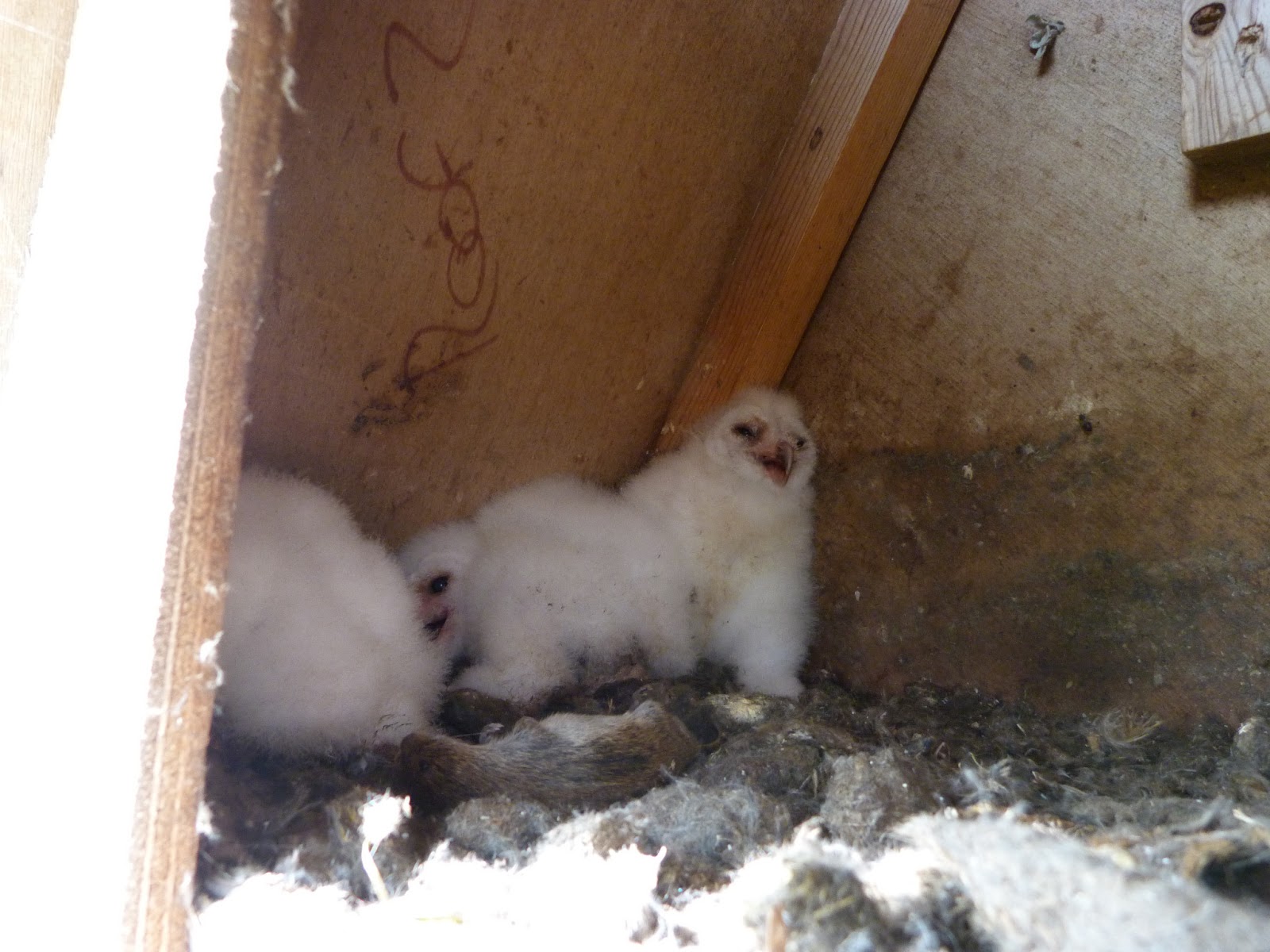
A rather successful box. Three young but too small at the present.
Three chicks with freshly delivered field vole (we saw her leaving as we approached).
Well used roost below the box.
We went to the final few boxes but found no more owls.
Another empty box with evidence of roost use. Showing how boxes gradually fill up.
Box with cold Stock Dove eggs
Nothing this year.
A Kestrel box - roosting only but wood shavings added to encourage breeding. Provision of clear view and flyway will be suggested to the farmer. We spoke to owners or managers at most sites and all were keen to know whether they had owls or other birds in residence.
Many thanks to all the land owners, and to Peter for sharing the day with us. It was fantastic.
Totals: 9
Stock Dove - 2
Barn Owl - 7